
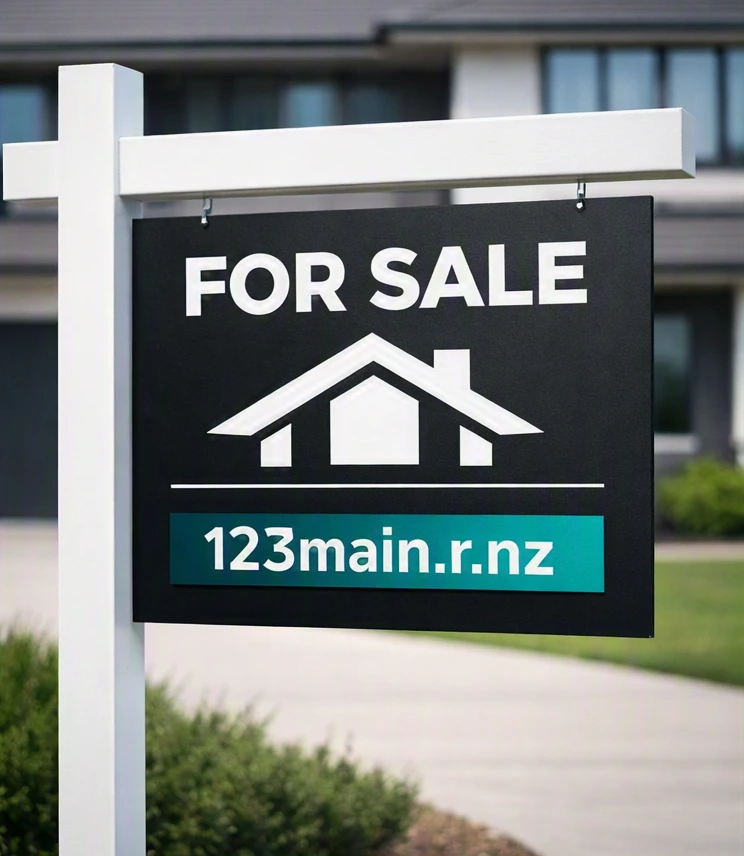
A signboard outside an open home gets a few seconds of attention from a passerby. A brochure left on a kitchen bench might get picked up days later. Both moments are worthless unless the person holding them can find their way to a listing, a booking form, or an agent profile without typing a long web address into their phone. That handoff, from a printed surface to a working link, is where a lot of real estate marketing quietly falls apart.

By working with agents, property managers, and agencies who print signboards, window cards, and flyers every week, and the ones getting the most out of that spend treat the printed link as part of the campaign, not an afterthought. A short, memorable Registry.r.nz link on a signboard or brochure can send a prospective buyer straight to a live listing, virtual tour, or open-home booking page, and the destination can be updated later without reprinting a single sign. That’s the gap between offline attention and online leads: a link people can actually read, remember, and trust enough to type or scan.
Registry – R.NZ was built around that exact problem: giving property professionals a short, branded r.nz name that stays fixed on printed materials while the page behind it changes with the campaign. If a listing sells, a new brochure needs an updated form, or an open home moves to a new date, the public link on the signboard doesn’t need to change.
Build a Campaign Around the Right Audience and Link
A real estate marketing strategy works when the audience, the goal, and the link are decided together, before any signboard or brochure goes to print. Buyer and seller leads, and campaign goals should shape which link goes where, and each campaign deserves one clear, consistent public-facing address that doesn’t change mid-run.
Separate Agent Brand Building From Listing Promotion
Personal branding and listing marketing solve different problems. An agent profile link (something like agentname.r.nz) supports long-term recognition across business cards, signboards, and social bios, while a listing-specific link supports one property for the length of its campaign. Mixing the two, sending all traffic to a general homepage, dilutes both the agent’s brand and the listing’s performance.
Define Buyer Personas, Seller Leads, and Campaign Goals
A listing presentation or CMA aimed at first-time homebuyers needs a different destination than one built for investors or downsizers. Buyer personas should determine what a scanned link opens: a mortgage broker referral page, a floor-plan download, or a booking form for an appraisal. Seller-focused campaigns often perform better pointing to a CMA request or listing-presentation booking rather than a generic contact page.
Choose One Consistent Public Link for Each Campaign
One campaign, one public link. Switching a signboard’s link partway through a listing’s life (from a shortener to a website URL to a QR code pointing somewhere else) confuses repeat visitors and breaks tracking. A single r.nz address can stay printed on every material for the campaign’s duration, with the destination updated in the Registry dashboard as needed.
Name Links for Listings, Open Homes, Appraisals, and Agent Profiles
Names should describe the destination, not the internal file structure. Useful patterns include:
123mainst.r.nzfor a specific listingopenhome.r.nzor123mainst.r.nz/openhomefor a Saturday viewingappraisal.r.nzfor booking a free property appraisalagentname.r.nzfor a personal profile linking to reviews, listings, and contact details
Turn Property Materials Into Actionable Digital Journeys
Printed real estate materials work best when every flyer, brochure, and signboard leads somewhere specific, not to a general homepage that makes a visitor hunt for the property they just saw. A well-placed QR code paired with the right destination, virtual tour, floor plan, or booking form, turns a passive print piece into a lead-capture tool with a measurable conversion rate.
Where QR Codes Belong on Signboards, Window Cards, and Print Ads
QR codes work best where a phone is already out and a person has a few seconds of dwell time: at the bottom corner of a signboard, on a window card at eye height, or in the corner of a print ad. On direct mail and brochures, placing the code near the property photo (not buried in fine print) keeps it visible without competing with the headline.
Use Clear Calls to Action for Open-Home and Listing Enquiries
A QR code without a label gets ignored. Text like “Scan for open-home times” or “Scan for the full listing” next to the code tells a passerby exactly what scanning will do, which lifts response rates far more than a bare code ever will.
Send Scanners to Virtual Tours, Floor Plans, and Property Documents
The destination should match what a print piece can’t show. A signboard code can open a virtual tour or the full gallery; a brochure code can open a floor plan or downloadable property document; an open-home window card can open a booking form for a private viewing slot.
Compare Long Listing URLs, Generic Short Links, and Memorable Registry.r.nz Links
| Long Listing URL | Generic Short Link | Memorable r.nz Link | |
|---|---|---|---|
| Readable on print | Poor | Weak | Strong |
| Recall without scanning | None | None | High |
| Destination changeable later | Depends on platform | Yes | Yes |
| Fits on signboards/business cards | No | Awkward | Yes |
| Brand association | Low | None | Strong |
| Malware/phishing checks | Varies | Varies | Included |
Choose Destinations That Move Leads Forward
The right destination depends on where a lead sits in their decision, not on what’s easiest to link to. A cold social scroller needs a different landing page than someone standing outside an open home with a phone already out.
Match Each Link to the Next Best Action
A signboard scanner is close to booking a viewing, so the link should go straight to open-home times or a booking form. A social bio visitor is earlier in their search, so a link to a broader property search or agent profile fits better than a single listing.
Use Social Content and Short-Form Video to Build Property Interest
Instagram, Facebook, TikTok, and LinkedIn all reward short-form video walkthroughs and neighbourhood tours over static photos. A single Registry.r.nz link in a profile bio (instagram.r.nz or similar) can point to a current listing or campaign page and get updated as new content goes live, without editing every past post’s caption.
Support Local Discovery With Search and Neighbourhood Content
Local SEO and neighbourhood guides bring in buyers researching an area before they’ve picked a specific property. Market reports, local market trends, and infographics published on a real estate website give search visibility a reason to convert, especially when paired with a memorable link that’s easy to reference in a follow-up conversation.
Capture Enquiries With Useful Offers and Timely Listing Alerts
Home valuation tools, new listing alerts, and saved-search sign-ups convert better than a bare “contact us” form. A dedicated link (valuation.r.nz or alerts.r.nz) makes these offers easy to promote across flyers, email newsletters, and social captions without a long tracking URL attached.
Manage Follow-Up, Measurement, and Campaign Changes
Printed links only pay off when the leads they generate flow into a CRM and get followed up quickly. Speed-to-lead, accurate measurement, and the ability to update a destination without reprinting are what separate a one-off campaign from a repeatable system.
Keep Printed Links Live While Updating the Destination
A signboard printed for a six-week campaign shouldn’t need reprinting because the open-home schedule changed or the listing sold and a new one took its place. Updating the destination behind an r.nz link takes a dashboard change, not a call to the print shop.
Measure Scans, Responses, and Conversion Quality
Tracking how many scans a signboard generates against how many turns into booked viewings or appraisal requests shows which materials are earning their print budget. A dedicated link per campaign makes this comparison straightforward, since traffic isn’t mixed in with a generic homepage URL.
Protect Trust With Accurate Claims and Safe Destinations
A property link that redirects to a broken page or triggers a browser warning damages trust fast, especially on a printed sign a buyer can’t easily verify. Redirect services with built-in malware and phishing checks help protect that trust before a bad destination ever reaches a visitor.
Frequently Asked Questions
How can real estate agents use QR codes on property signboards?
Placing a QR code in a corner of a signboard, alongside text like “Scan for open-home times,” lets a passerby move straight from the street to a listing page or booking form. The code should link to a destination that updates automatically as the open-home schedule or listing status changes.
What should a real estate QR code link to?
The best destination depends on the material: a signboard code works well linking to a virtual tour or open-home booking form, while a brochure code suits a floor plan or downloadable property document. Matching the destination to what the print piece can’t show keeps the scan worthwhile.
Can I change a property link after brochures or signboards are printed?
Yes, a redirect-based link like an r.nz name lets the destination change in the dashboard while the printed link stays exactly as printed. This avoids reprinting signboards or brochures every time a listing sells or a schedule updates.
Are memorable r.nz links better than generic short links for property campaigns?
A memorable r.nz link reads clearly on a signboard or business card and builds recall in a way a random-string short link doesn’t. Both can redirect and update destinations, but only a purpose-named link communicates what a visitor will find before they click.
How do I name links for open homes and appraisal bookings?
Names should describe the action or property directly, such as openhome.r.nz, appraisal.r.nz, or an address-based name like 123mainst.r.nz. Clear, descriptive names help visitors trust the link and help agents keep multiple active campaigns organised.
What should I test before publishing a QR code for a listing?
Scan the code with a few different phone models and camera apps before it goes to print, confirming it opens the intended page without errors or warnings. It’s worth checking the destination page loads correctly on mobile data, since many scans happen curbside outside the property rather than on home WiFi.