

Automated Security: Protection Built Into Every Redirect
Every time someone clicks a link, they’re trusting whatever is on the other end of it. Automated security is what lets r.nz honour that trust without asking you to do anything extra: every redirect is checked before it ever reaches your audience, by default, on every plan. It’s part of how domain redirects work on r.nz, not a separate step you switch on, just something that happens automatically the moment a redirect fires.
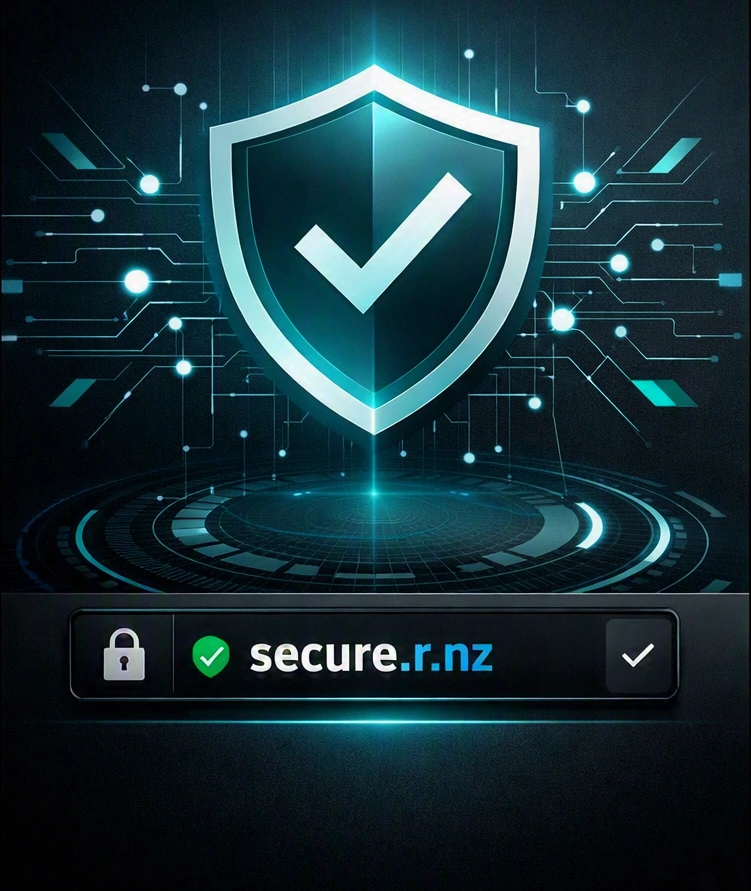
How Automated Security Works
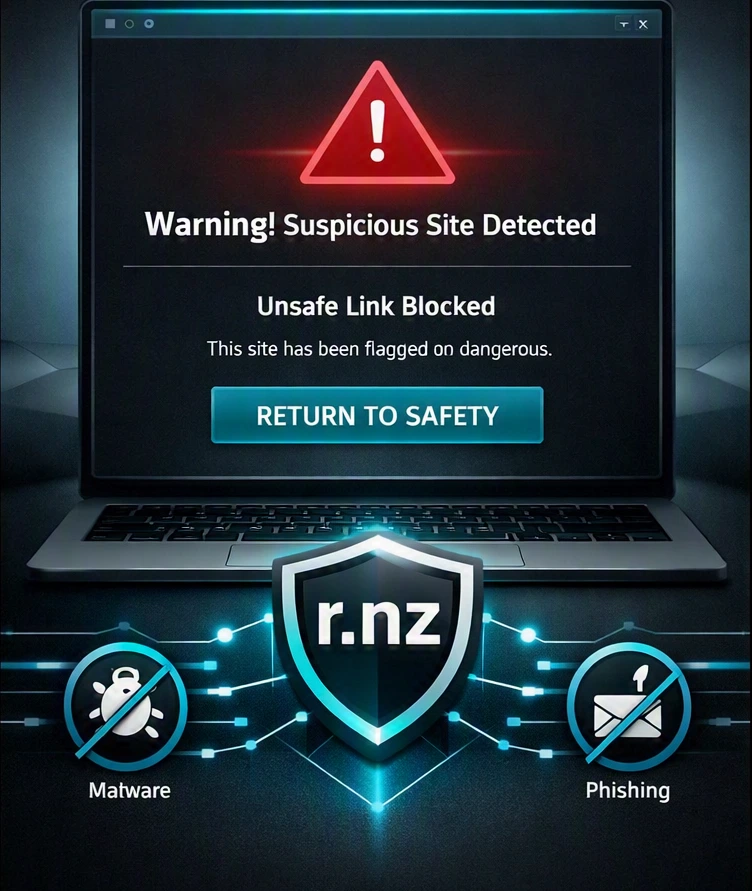
You don’t configure anything or install a separate tool. The moment a domain is set up on r.nz, automated security is already running behind it. Every destination is checked against global threat databases and monitored on an ongoing basis, not just once at setup. If a destination is ever flagged for malware, phishing or other malicious content, r.nz stops the redirect before your visitor reaches it and shows a safe warning page instead.
Built at the Edge, Not Bolted On Afterwards
Traditional security filters can add a noticeable delay to a redirect, since the check happens as a separate step before the visitor is sent on. r.nz’s automated security runs at the edge instead, as part of the same instant check every redirect already goes through. That means the added protection doesn’t come with added waiting: your audience gets a fast, secure redirect either way.
Threat Intelligence That Updates Continuously
Phishing tactics and malware change constantly, so a security check that never updates stops being useful fairly quickly. Registry built r.nz’s automated security to draw on threat intelligence that updates continuously, so a domain that has been redirecting safely for a year is checked against the same current data as one set up an hour ago. You don’t need to review or renew anything for that protection to keep working.
Why This Matters for Marketers, Creators and Businesses
Whether you’re a marketer running paid campaigns, a creator sharing an r.nz domain from your social media bio, or a business managing links across multiple client campaigns, every redirect carries the same underlying risk: the destination can change after the link has already been published.
A website that was safe when you first created the redirect could later become compromised, infected with malware, or associated with phishing or other malicious content.
That’s why our automated security doesn’t rely on a one-time check. We use ongoing destination monitoring together with continuously updated threat intelligence and global threat databases to support redirect security, malware protection and phishing protection. Each destination continues to be checked after the r.nz domain has been shared, helping identify new threats that may appear later.
If a destination is flagged as unsafe, r.nz can stop the redirect before the visitor reaches that destination and display a safe warning instead. This protection forms part of how domain redirects work on r.nz, rather than requiring users to install or manage a separate security layer.
For marketers, this means campaign links remain protected after they are published. For creators, it reduces the need to manually recheck every bio link. For businesses managing multiple redirects, it adds an ongoing layer of protection across client campaigns without requiring separate security tools for each link.
The important difference is that this protection is built directly into the redirect process. We actually use automated destination checks as part of the r.nz system rather than treating security as an optional feature that runs once and is then forgotten.
If you’re comparing features across different options, you can also review the Plans & Pricing page to see how r.nz plans are structured.
What Automated Security Doesn’t Promise
Automated security strengthens the way destination risk is managed, but no automated security system can guarantee that every possible online threat will always be detected.
We therefore don’t claim that malware protection, phishing protection or redirect security can guarantee specific marketing outcomes such as higher click-through rates, conversions or engagement.
What our system does provide is practical, ongoing protection against a genuine weakness of ordinary short links: the destination may become unsafe after the link has already been distributed. By continuously checking destinations against current threat information, r.nz helps reduce the likelihood of visitors being redirected to known malicious or compromised content.
For marketers, creators and businesses, that means one less security issue to monitor manually—and a more responsible way to manage links that may remain publicly accessible for months or years.
If you believe a redirect has been blocked incorrectly or you have questions about how the protection works, you can contact our team.
Ready to create a protected r.nz domain? Find your perfect name and set up your redirect.
Frequently Asked Questions
Do I need to turn automated security on, or set it up myself?
No. It runs by default on every r.nz domain and every plan, with nothing to configure.
What happens if a destination becomes unsafe after I've already shared the link?
Registry’s monitoring is ongoing, not a one-time check. If a previously safe destination is later flagged, the redirect is stopped and a safe warning page is shown instead.
Does automated security slow down my redirects?
No. The check happens at the edge, in the same step as the redirect itself, so there’s no separate delay added on top.
Is this feature only available on higher-priced plans?
No. Automated security is included on every r.nz plan, not held back for a higher tier. See our Plans & Pricing page for what else varies between plans.
What exactly gets checked?
Each destination is checked against global threat databases for known malware, phishing and other malicious content, and that check runs continuously rather than only at setup.
Can a false positive block a safe redirect by mistake?
It’s possible with any automated system. If you believe a redirect has been blocked in error, contact our team and we’ll look into it.
Ready to register a domain that’s protected by default? Find your perfect name and set it up today.