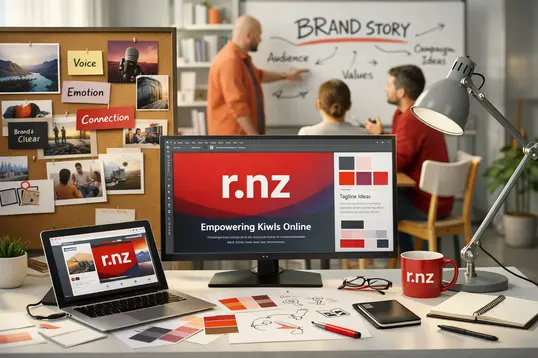

A great brand name earns it’s keep the moment someone hears it, says it out loud, or types it into a search bar. If it sticks after one mention, does the heavy lifting of introducing your business before you’ve said another word. What makes a brand name stand out comes down to five practical qualities: it’s distinctive, easy to say and spell, emotionally on brand, built to scale, and pairable with a short, memorable web address.
For small-business owners and creators juggling limited marketing budgets, a name that people can recall without prompting is worth more than clever wordplay. This guide walks through how to test a name for staying power, how to build consistent identity around it, and how to lock in a short domain that keeps working as your business grows.
Why Distinctiveness Builds Brand Value
A distinctive name earns recognition faster than a descriptive one, because it gives people something specific to latch onto instead of a generic label competitors could just as easily use. Distinctiveness is what turns a name into an asset that compounds in value the longer you use it consistently.
Recognition, Recall, and Word of Mouth
People remember what surprises them slightly. Apple and Nike work as brand names partly because neither describes the product category, which forces the brain to store them as unique markers rather than generic terms.
That same mechanism drives word-of-mouth marketing. A distinctive name is easier to repeat accurately in conversation, which matters when a happy customer is recommending you to a friend over coffee rather than sending a link.
How a Name Shapes Customer Perception
Your name is often the first signal customers get about what kind of business you are. Google suggests speed and simplicity; Xerox became so tied to its category that the name itself turned into a verb, for better and worse.
A name that sounds premium, playful, or no-nonsense sets an expectation before a customer visits your website or shopfront. Getting that first impression right saves you from fighting an uphill perception battle later.
Emotional Resonance Beats Generic Description
Names that spell out exactly what a business does (Quick Plumbing Services, Auckland Web Design) are easy to understand but hard to remember, because they blend into every competitor doing the same thing. Coca-Cola doesn’t describe a drink; it built an emotional identity around refreshment and shared moments instead.
For small businesses, this doesn’t mean going abstract for its own sake. It means picking a name that carries a feeling or personality your customers connect with, then letting your marketing fill in the practical details.
How to Test Whether a Name Will Stand Out

Test a name the way a stranger will encounter it: spoken aloud, typed from memory, and read off a sign from a moving car. Names such as Slack, Notion, and Oura pass this test because they’re short, phonetically simple, and don’t rely on unusual spelling to make sense.
Is It Easy to Say, Spell, and Remember?
Say the name out loud to five people and ask them to write it down. If more than one person spells it differently, the name has a memorability problem that no amount of clever branding will fix.
Short names with familiar sound patterns travel further, especially when customers are repeating them by phone, in a review, or over a noisy market stall. Wave and Slate work as names partly because there’s only one obvious way to spell them.
Does It Fit Your Target Audience and Positioning?
A name should match the expectations of the people you’re trying to reach. A boutique creative studio and a trades business calling out-of-hours emergencies need very different tones, even if both want a name that stands out.
Think about your target audience’s age, industry, and the level of formality they expect. Testing a shortlist with a handful of real customers beats guessing based on what sounds good to you alone.
Will It Still Work as the Business Grows?
Scalability matters more than it seems at the start. Names tied to a single product, suburb, or service (Wellington Dog Walking, Budget Phone Repairs) can box you in if you expand into new regions or offer new things.
Meta rebranded from Facebook to signal a wider ambition beyond one product; X did the same for Twitter. Most small businesses won’t rebrand at that scale, so it pays to choose a name broad enough to grow into from day one.
How to Compare Name Ideas With Market Research
Run your shortlist past real people before committing. A simple structured comparison works better than gut feel alone:
| Criteria | Name A | Name B | Name C |
|---|---|---|---|
| Easy to spell after hearing it once | Yes | No | Yes |
| Domain available as a short link | Yes | Yes | No |
| Matches target audience tone | Strong | Weak | Moderate |
| Room to expand beyond current offer | Yes | No | Yes |
Ask people what the name makes them expect the business to sell, then compare that against your actual brand purpose and brand promise. A mismatch here is easier to fix before launch than after you’ve printed signage.
Make the Name Part of a Consistent Brand Identity
A name only stands out fully when everything around it reinforces the same message. Brand identity ties your name to a consistent personality, visual style, and customer experience, so each touchpoint strengthens recall instead of diluting it.
Align Brand Personality, Voice, and Messaging
Your brand voice should sound like the same person wrote your website, your social captions, and your invoices. Dove’s messaging stays consistently warm and reassuring across every channel, which reinforces the brand promise behind the name.
Write down three words that describe your brand personality (approachable, bold, precise) and check new copy against them before it goes out. Consistency here does more for recall than any single clever line.
Use Logos, Colour, and Typography to Reinforce Recall
Visual identity gives your name a face people recognise from a distance. A distinct colour palette, a legible typeface, and a simple logo help customers spot you on a crowded shelf, a busy street, or a cluttered social feed.
A branding agency can help refine these elements, but even a DIY approach benefits from picking one or two colours and sticking with them everywhere, from packaging to your email signature.
Deliver the Same Promise Across the Customer Journey
The name sets an expectation; the experience needs to match it. If your name suggests speed or friendliness, your customer service, website, and follow-up communication should deliver exactly that.
A gap between the promise in your name and the reality of dealing with your business erodes trust fast, no matter how catchy the name sounded on day one.
Secure a Short, Premium Digital Presence
A standout name needs a digital address that’s just as easy to share as it is to say. Long or clunky URLs undercut an otherwise strong name, especially when customers are trying to type it from memory or scan it off a printed flyer.
Why Short Branded Domains Are Easier to Share
A short branded domain is easier to read on a signboard, quicker to type on a phone, and less likely to get mangled in a text message or business card. This matters most in New Zealand-facing contexts like real estate signboards, trade van signage, and market stalls, where people have seconds to remember what they saw.
Platforms like Registry – R.NZ let you claim a short r.nz name and point it wherever your customers need to go, whether that’s your main website, an online store, or a social profile, without asking customers to memorise a long address.
Check Domain Availability, Social Handles, and Trademark Risk
Check domain availability and social handles for your shortlisted names before falling in love with one. A name that’s perfect but already taken across every platform you need creates avoidable friction later.
Run a basic trademark search too. Domain availability and social handle checks tell you what’s practically free to use; a trademark search tells you what’s legally risky, and the two aren’t the same thing.
Keep Campaign Links Consistent When Destinations Change
A short domain lets you keep one public-facing link even as what it points to changes behind the scenes. A redirect like cafe.r.nz/deals can stay printed on your menu while the actual promotion changes every month, because you update the destination in a dashboard rather than reprinting materials.
This same flexibility works well for QR codes, social bios, and paid campaigns, where the link needs to stay fixed on your signage or ad creative even as the landing page evolves for a new offer.
Choose a Name People Can Remember and Find
A name stands out when it’s distinctive enough to recognise, simple enough to recall under pressure, and backed by a digital presence that matches its polish. These three things work together rather than in isolation.
Building brand value takes patience, but the payoff shows up in word of mouth, repeat searches, and customers who type your name straight into a browser instead of hunting for you through a search engine. A clear brand strategy behind the name gives every future marketing decision somewhere solid to stand.
Test names against real people, protect the ones worth protecting, and pair the winner with an online presence that’s as short and memorable as the name itself.
Frequently Asked Questions
What makes a brand name memorable?
A memorable brand name is short, easy to pronounce, and distinctive enough that it doesn’t blend in with competitors. Names that carry an emotional association or an unusual sound pattern tend to stick better than purely descriptive ones.
Should a brand name describe what the business does?
A brand name doesn’t need to describe the business directly, and often works better when it doesn’t. Descriptive names can feel generic and hard to differentiate, while distinctive names build stronger recall once customers associate them with your specific business.
How can I check if a brand name is already taken?
Search domain availability, social media handles, and a trademark database for your shortlisted names before committing. Checking all three separately matters, since a name can be free as a domain but still carry trademark risk in your industry.
Why does domain availability matter when choosing a brand name?
Domain availability affects how easily customers can find and share your business online. A short domain that matches your brand name reduces friction for people typing your name from memory or scanning it from print materials.
Can a short branded link help a business stand out?
A short branded link makes a name easier to share across QR codes, social bios, signage, and print, because it’s quicker to read and type than a long web address. Services like Registry – R.NZ also let you update where the link points without changing the public-facing name.
How do I know whether my brand name will still suit future growth?
Check whether the name ties you to one product, location, or service that might not apply as you expand. A name broad enough to cover future offerings avoids the cost and confusion of rebranding down the track.