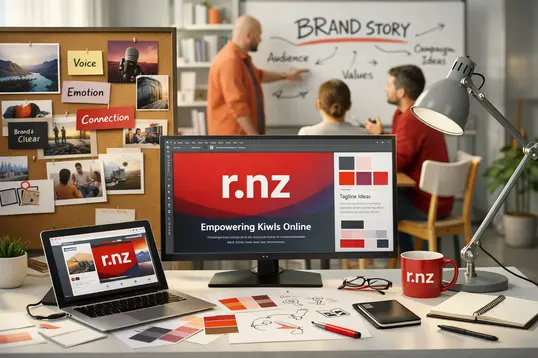

A signboard outside an open home, a flyer left on a café counter, a single line in an Instagram bio. Each of these moments gives you a few seconds to be remembered, and the link you print or say out loud either helps or hinders that moment. Memorable branding with Registry.r.nz starts with a simple idea: a short, brand-led address that people can read once, recall later, and trust when they see it again.

A short r.nz subdomain such as yourbrand.r.nz gives New Zealand businesses a link that’s easy to say, easy to type, and easy to update, which makes it a practical branding tool for print, social bios, and campaign materials. Unlike a generic shortened URL full of random characters, a name built on your brand carries meaning the moment someone sees it. It also stays put. You can change the destination behind the link as your website, offer, or listing changes, without reprinting a single sign or business card.
This matters because trust is built in small, repeated moments. A visitor who types a link and lands somewhere unexpected loses confidence quickly. A link that consistently sends people where they expect to go, on a domain that feels intentional rather than accidental, does quiet work for a brand over time.
What Makes a Branded Link Memorable?
A link earns recall when it’s short enough to remember without effort and specific enough to signal exactly where it leads. Two separate qualities drive this: how easily the name lodges in memory, and how confidently a visitor acts on it once they’ve seen it.
Why Short, Purposeful Names Are Easier to Recall
Shorter names carry less cognitive load. A name like cafe.r.nz asks nothing of the reader beyond recognising the word “cafe,” so it survives being glanced at on a menu or heard once at a market stall. Long or clever names, by contrast, ask people to remember spelling, order, or a pun, and most of that effort evaporates within minutes.
How Clear Naming Builds Recognition and Confidence
A name that matches the brand or purpose behind it builds recognition faster than an abstract one. If a plumber’s link reads sparky.r.nz or a real estate listing reads openhome.r.nz, the connection between name and purpose is instant. That clarity does more for trust than styling or colour ever will on a printed flyer, because it tells the visitor what to expect before they’ve clicked.

How to Choose a Name People Can Use
The most usable link names are chosen around what the customer needs to do next, not around how clever the wordplay feels. Registry supports this by letting a business claim a name under r.nz and decide, separately, what page it points to and how long that pairing lasts.
Match the Name to the Customer’s Intended Action
Pick names based on the action you want, whether that’s booking, browsing, or following. A tradesperson handing out a card at a job site benefits from a name like quote.r.nz, because it tells the recipient exactly what will happen when they visit. This approach draws on the same thinking used when choosing a brand name that stands out: specificity beats novelty.
Separate Long-Term Brand Links From Short-Term Campaign Links
A permanent brand link and a temporary campaign link serve different jobs and should look different. yourbrand.r.nz can sit on a shopfront sign for years, while a variant such as yourbrand.r.nz/spring can be retired once a promotion ends without disturbing the main name.
Avoid Names That Are Clever but Unclear
Wordplay and abbreviations often make sense only to the person who invented them. A name that requires explanation defeats the purpose of a short link, so it pays to test a proposed name on someone outside the business before committing to print.

Connecting Print, Social Media, and In-Person Promotion
A single readable link can travel across signboards, social bios, and face-to-face conversations without losing meaning in any of them. That consistency is what lets a business run one campaign identity across very different channels at once.
Using QR Codes Alongside a Readable Link
QR codes are fast for a phone camera but useless if someone wants to note the address down or say it out loud. Printing a readable link such as cafe.r.nz beneath the QR code covers both situations, and it means the material still works if the code is damaged, poorly lit, or simply skipped.
Creating Consistent Links for Facebook and Other Social Profiles
A branded link gives a Facebook bio or “link in bio” field something tidier than a long profile URL. Because the destination can be changed later, the same yourbrand.r.nz/facebook path can be reused indefinitely even if the underlying profile page changes.
Sharing Event Pages, Gift Registries, and Invitations With Family and Friends
Personal events benefit from the same clarity as business links. A wedding gift registry or a party invitation shared with family and friends is easier to pass along verbally when the link reads plainly, rather than as a string of letters copied from an app.
Making Events and Expos Easier to Follow Up
At events and expos, attention is brief and hands are often full. A name printed clearly on a stand or business card gives people something to remember after the conversation ends, when a QR scan mid-handshake isn’t practical.

Creating Clear Paths for Different Customer Journeys
One base subdomain can branch into several purpose-led paths without confusing visitors, provided each path maps clearly to a distinct action. This structure suits businesses with more than one thing for customers to do.
When a Base Link Is Enough
A single business with one main destination, such as a homepage or booking page, rarely needs more than one link. cafe.r.nz pointed straight at the café’s website covers most everyday cases.
Using Purpose-Led Paths for Offers, Bookings, and Resources
Where a business has several distinct journeys, paths under the same base name keep things organised: cafe.r.nz/menu, cafe.r.nz/deals, and cafe.r.nz/facebook each send visitors somewhere specific while staying visibly part of the same brand. This mirrors the kind of structure discussed in guidance on subdomains for New Zealand businesses, where separate paths serve separate purposes without fragmenting the brand.
Updating Destinations Without Replacing Public Materials
The destination behind any r.nz link or path can be edited from the dashboard at any time. A signboard printed with openhome.r.nz keeps working even after the listing sells and the link is redirected to a new property, which avoids reprinting signage every time a listing changes hands, a point relevant to real estate marketing in particular.
Why Secure, Predictable Redirects Matter
A redirect that visitors can trust is one that loads quickly, goes where it says it will, and doesn’t interrupt the visit with unexpected content. That predictability is part of what makes a branded link worth using instead of a generic shortener.
Reducing Hesitation Before a Click or Scan
People hesitate over links that look unfamiliar or suspicious, particularly on social media and in emails. A link built on a recognisable brand name and a stable domain removes one layer of doubt before someone taps or scans it.
Keeping Redirects Fast and Free of Unwanted Distractions
Registry states that its redirects run on Cloudflare’s globally distributed edge network, with sub-50ms global latency, and that it does not inject forced interstitial ads, unexpected tracking pixels, or third-party scripts into the redirect. That absence of clutter matters most in the seconds right after a click, when any delay or unfamiliar pop-up can cause a visitor to back out.
Protecting Visitors From Harmful Destinations
Registry checks destinations in real time for phishing, malware, and compromised content, and can stop a redirect and show a warning page where a threat is detected. Redirects are also protected by SSL. For a business, this kind of routine checking is less visible than the branding itself, but it underpins the trust a link needs to carry.
Supporting Visibility and Measurement in New Zealand
A branded link improves how a business is recognised and tracked across channels, without acting as a substitute for the content and technical foundations that support search visibility. Treating link naming and SEO as separate jobs avoids overpromising what a redirect can do.
What Branded Links Can and Cannot Do for SEO
A memorable r.nz link makes a brand easier to recognise on a business card or signboard, and it can support referral traffic when shared consistently. It does not replace the need for useful on-site content, accurate business listings, and genuine domain authority, all of which remain the main drivers of search performance in New Zealand.
Keeping Campaign Tracking Out of Public-Facing URLs
Registry supports UTM parameters, campaign IDs, and custom tags behind the redirect, so a business can track where visitors came from without printing a long tracking string on a flyer or business card. The public-facing link stays short; the tracking detail lives behind it.
Using Consistent Links to Understand Channel Performance
Using the same base link across print, social, and events, with distinct paths for each channel, makes it easier to see which channel is generating activity over time. This is more useful in practice than trying to interpret a jumble of one-off shortened links created for each campaign, which is a distinction covered in more depth in guidance on link management.
A Stable Link Is a Lasting Brand Asset
A short, brand-led link keeps doing its job long after the material it’s printed on has served its purpose. Because the destination behind an r.nz name can be updated at any time, the public address on a signboard, business card, or social bio doesn’t need to change when a website, listing, or offer does.
That stability, paired with a name people can actually recall, is what separates a branded link from a throwaway shortened URL. It shows up consistently across print and digital channels, keeps campaign tracking hidden from public view, and gives a business one address to build recognition around instead of several unrelated ones.
Frequently Asked Questions
What is a branded r.nz link?
A branded r.nz link is a short subdomain, such as yourbrand.r.nz, that redirects visitors to a chosen destination like a website, store, or social profile. The name is chosen to reflect the brand or purpose behind it, rather than being a random string of characters.
Can I change where my r.nz link redirects without changing the link?
Yes. The destination behind an r.nz name or path can be updated from the dashboard at any time, so the public-facing link printed on signage, cards, or QR codes stays the same even when the underlying page changes.
Do branded short links help with SEO in New Zealand?
Branded short links support recognisability and can contribute to referral traffic, but they don’t replace the core factors behind search visibility, such as useful content, accurate business information, and established domain authority. Treat a memorable link as a branding and usability tool rather than a ranking tactic.
Should I include both a QR code and a short link on printed marketing?
Yes, since a QR code suits a quick phone scan while a readable link like cafe.r.nz still works if someone wants to type it, note it down, or say it aloud. Printing both covers more situations than relying on a code alone.
Can I use one branded link for Facebook, events, and printed materials?
One base link, such as yourbrand.r.nz, can be used across Facebook, events, and print, with purpose-led paths added for specific journeys like yourbrand.r.nz/facebook or yourbrand.r.nz/deals. This keeps every channel tied to the same recognisable name.
How do I choose a memorable name for a branded link?
Choose a name that reflects the brand or the action you want the visitor to take, keep it short enough to recall without effort, and avoid wordplay that needs explaining. Testing a proposed name on someone outside the business before printing it is a practical way to check it actually reads clearly.